How after hours business cleaning works comes down to four steps: a walkthrough sets the scope, the time window and how the cleaner gets in; the cleaner arrives after closing and follows the written checklist; the space is locked and the alarm set exactly as agreed; and a short message confirms the visit and flags anything your team should know.
Key takeaways
- Plan access, alarm, lights and thermostat before the first night, in writing.
- A visit follows a fixed order: trash, dusting, surfaces, restrooms, kitchen, floors.
- Lock-up is a checklist of its own, not an afterthought.
- A message after each visit is how you know it happened without checking.
Jump to the lock-up checklist, or see what cleaning at closing really costs your team.
How After Hours Business Cleaning Works, in Short
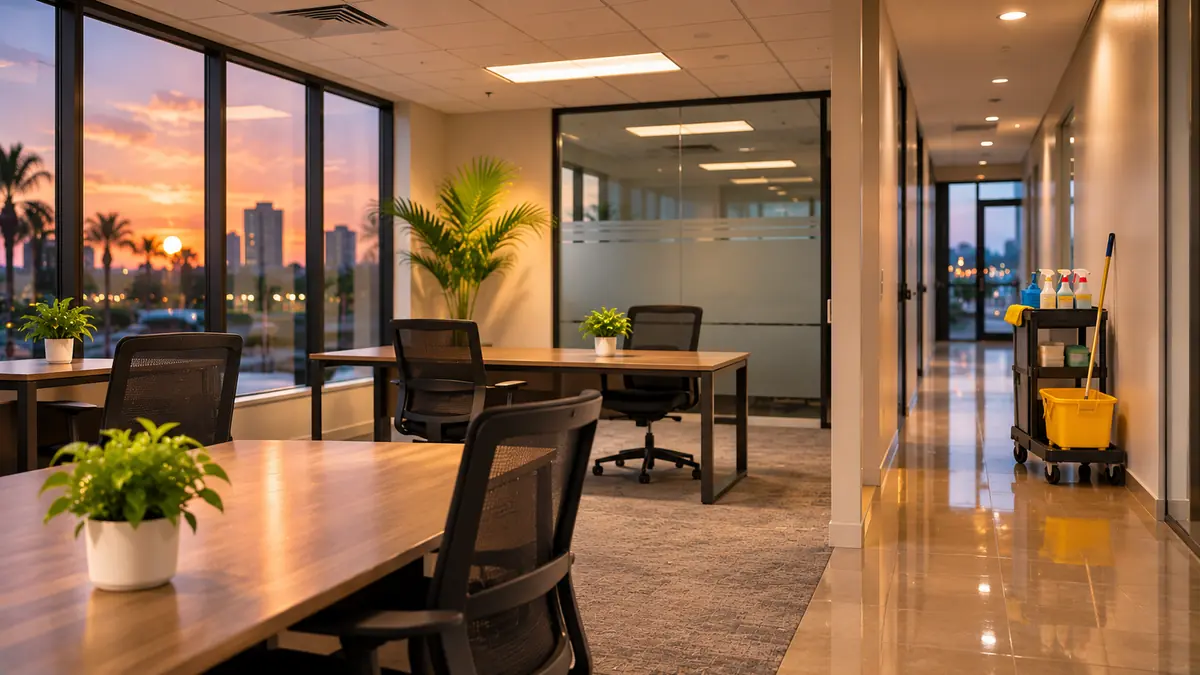
If you are wondering how after hours business cleaning works, picture a routine built so nobody has to stay late. The cleaner comes after your team leaves, cleans to a written list, locks up and tells you it is done.
It works in four steps, and three of them are planning around the cleaning: how the cleaner gets in, what they must not touch, how the space is left and how you find out. Each is settled once, then repeated every visit.
- Plan: scope, time window and access agreed at a walkthrough
- Clean: the same checklist, in the same order, every visit
- Lock up: doors, lights, thermostat and alarm left exactly as agreed
- Confirm: a short message when the visit is done
Step 1: Planning the Schedule and Access
Planning starts with a walkthrough, ideally near closing time, when the office looks the way the cleaner will find it. That shows where trash piles up, which restrooms get the most use and what the break room looks like after a full day. At Gatehouse Clean, every business client starts with this walkthrough, and the scope, time window and access steps go into a written checklist before the first night. VALIDAR
Choosing the Time Window
Most small businesses choose between three windows. Agree on a window rather than a fixed minute, so a late meeting or a busy road does not throw the night off.
| Question | Evening, after close | Early morning, before open | Weekend |
|---|---|---|---|
| Best for | Offices and practices that close by early evening | Offices where people work late | Weekly deep work or offices closed on weekends |
| Main benefit | The day's mess is cleaned the same night | The space is freshest when the first person arrives | Plenty of time for detail tasks |
| Trade-off | Late workers may overlap with the visit | No slack if the visit runs long | Two days of use before the next clean |
Our available time slots for business cleaning: [PREENCHER: horários disponíveis para limpeza comercial].
Getting In: Keys, Fobs, Smart Locks and Alarms
Write down every step between the parking lot and the first light switch. In a professional building, that can mean a building door that locks at night, a suite key and an alarm panel, each with its own rules.
- Building access after hours: fob, key or a call to the property manager
- Suite access: physical key, keypad or smart lock with its own code
- Alarm: a separate user code for the cleaner, plus the cancel procedure
- Who to call if a door or code does not work
How Gatehouse Clean stores and returns keys and codes: [PREENCHER: política de chaves e códigos de alarme].
House Rules for the Space
Agree on the small things that cause the biggest friction. Which rooms are off limits, whether lights stay on in the lobby, where the trash goes, and whether the thermostat is left alone.
The thermostat matters more in Florida than most places. If your office raises the AC setting at night to save power, the cleaner should leave it exactly as found, and tell you if the space feels unusually warm or humid, which can point to an AC problem.
Step 2: What Happens During the Visit
A good after-hours visit runs in the same order every time. The order is what keeps dust from settling on surfaces that were just wiped and footprints off floors that were just mopped.
- Enter, disarm the alarm with the cleaner's own code and turn on only the lights needed.
- Empty trash and recycling across the space, so bins are not forgotten at the end.
- Dust reachable surfaces from high to low.
- Wipe clear desk surfaces, counters and high-touch points, without moving papers.
- Clean restrooms and refill soap and paper from your stock.
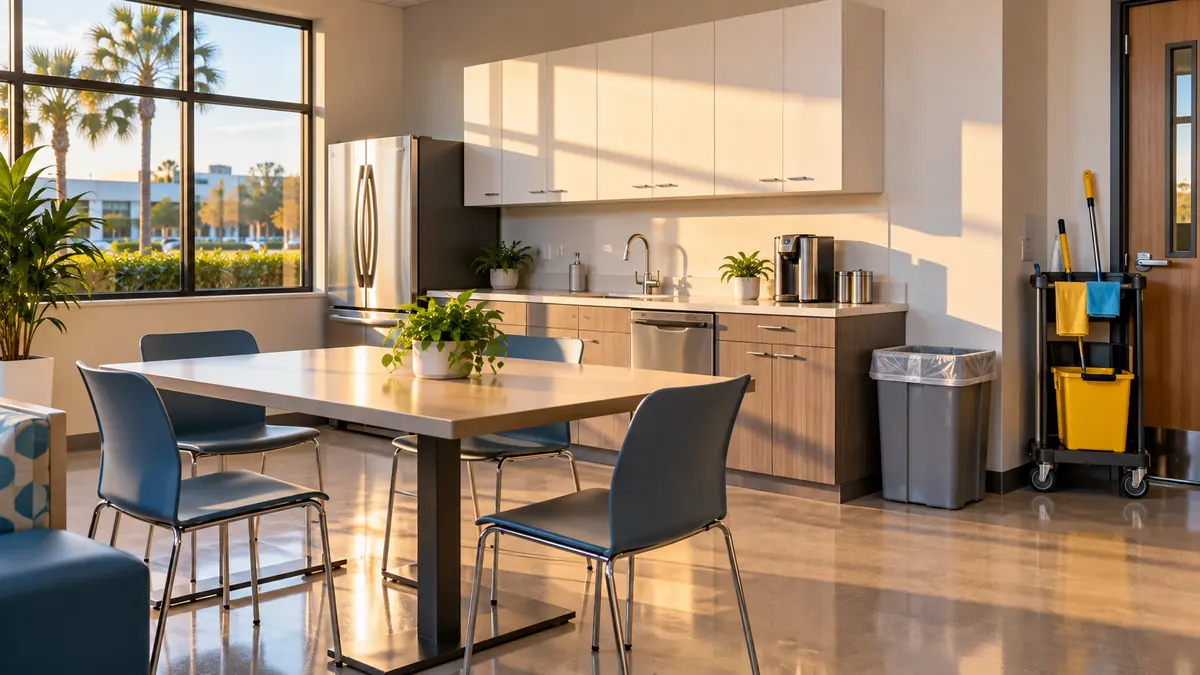
- Clean the break room: counters, sink, the outside of appliances and tables.
- Do the floors last, working toward the exit.
How long the visit takes depends on square footage, restrooms and the tasks due that night. Our average visit: [PENDENTE: duração média da visita por sq ft].
What gets done each night depends on the scope by frequency. Restrooms, the kitchen and trash usually come every visit, while detail work rotates weekly or monthly. Our guide on how often an office should be cleaned shows how team size changes that rhythm.
Two things never happen during a careful visit: opening drawers or files, and using office phones or computers. Papers and screens are cleaned around, not moved.
Want a routine like this for your office or practice?
We plan access, scope and lock-up at a walkthrough, then clean outside your hours. See our commercial cleaning in Davenport for offices and clinics.
Request a Walkthrough for My BusinessStep 3: Locking Up
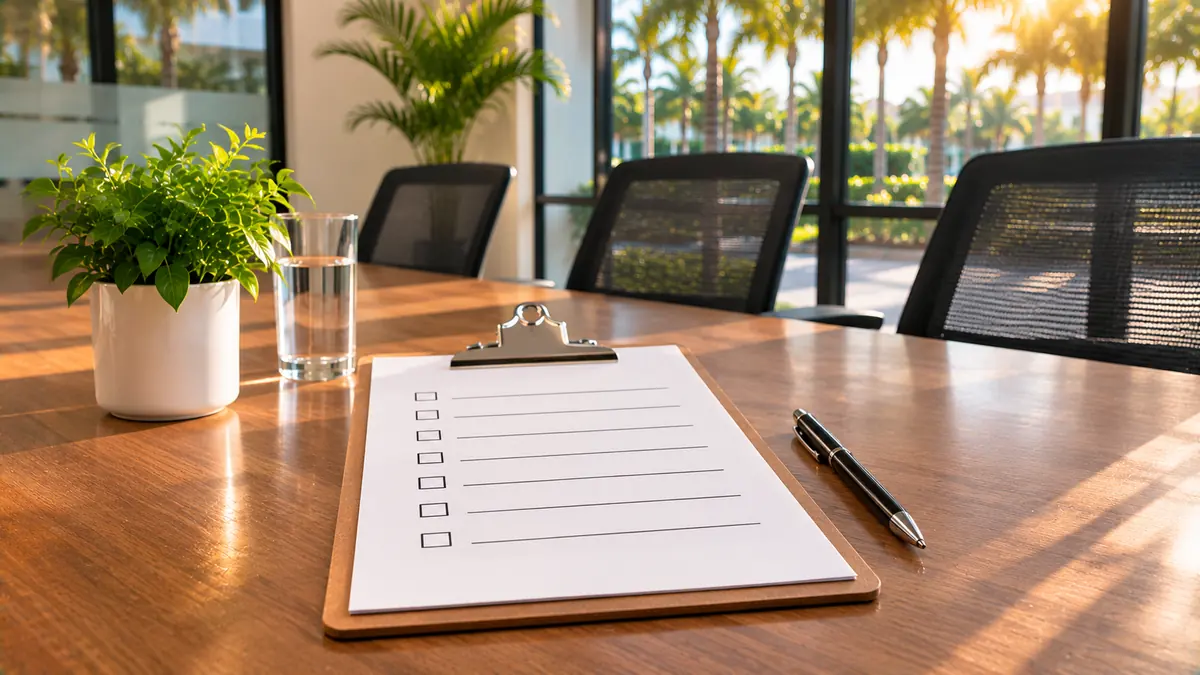
Lock-up deserves its own checklist, because a door left unlatched undoes everything else. The cleaner should walk the space once more before leaving, in the same order every time.
- Every interior and exterior door pulled to check it latched
- Lights set as agreed, including any that stay on
- Thermostat untouched, or set as agreed
- Water off at every sink, and no toilet left running
- Trash taken to the agreed spot, not left by the door
- Alarm armed and the panel showing it is set before the last door closes
Humid summers can make some doors swell and stick, so a door that looks closed may not be latched. Pulling each one is a habit worth asking for by name.
Gatehouse Clean locks the office or practice as agreed at the walkthrough when we leave. Any extra lock-up step for your building is added to your written scope.
Step 4: Confirming the Visit
The confirmation is how you know the visit happened without checking in person. It should arrive the same night or before your team arrives the next morning.
A useful message is short. It says the visit is done and flags anything your team should know, such as low paper towel stock, a leak under a sink, a burned-out light or a door that would not latch.
You also have a second record you may not use: your alarm or smart-lock log, which shows when each user code was used. Comparing it with the confirmation now and then is a simple way to keep any cleaner honest, including us.
Our confirmation: a short message after each visit that says it is done and flags anything that needs attention [VALIDAR: formato e canal da confirmação; incluir fotos ou não].
What Cleaning at Closing Really Costs Your Team
Many small offices start with no cleaner at all. Staff take turns with the trash, the fridge and the restroom at the end of the day. It feels free, but those minutes are paid hours.
The table shows how a few minutes a day add up over a five-day week and about four weeks. Multiply the hours by your own hourly wage to see what the routine costs.
| Staff minutes per day | Hours per week (5 days) | Hours per month (about 4 weeks) |
|---|---|---|
| 15 minutes | 1.25 hours | 5 hours |
| 30 minutes | 2.5 hours | 10 hours |
| 45 minutes | 3.75 hours | 15 hours |
| 60 minutes | 5 hours | 20 hours |
Two people spending 30 minutes each is 60 staff minutes a day, which is about 20 hours a month. Compare that number, at your wage, with a written quote for scheduled cleaning. The real cost is often the work that did not get done, not only the wage.
If you are deciding what kind of provider to compare, read commercial cleaning vs janitorial first, then use the 8 questions to ask a commercial cleaning company to check each quote.
After-Hours Cleaning in a Medical or Dental Office
Practices follow the same four steps, with a few extra rules. The visit starts only after the last patient leaves and clinical staff have closed their rooms.
- Staff put away instruments and patient care equipment before the cleaner arrives
- Sharps and regulated medical waste stay with the practice's licensed waste hauler
- Exam room surfaces are cleaned as agreed with your staff, in writing
- Charts and screens are cleaned around, never opened or moved
Disinfection needs time. The EPA explains in its page on selected EPA-registered disinfectants that a surface should stay visibly wet for the full contact time on the label. An after-hours visit, with no patient waiting, is the easiest time to respect that.
Some practices around Davenport, ChampionsGate and Kissimmee open early so patients can come before work, which leaves the evening as the cleaning window. See how we handle it in our after-hours medical office cleaning, or use the medical office cleaning checklist to plan it room by room. For regular offices, see our after-hours office cleaning.
Have a building with unusual access, or a schedule that changes by season? Talk to us about your cleaning and we will plan it at the walkthrough.
After-Hours Cleaning FAQ
Short answers to what owners and office managers ask before their first after-hours visit.