A medical office cleaning checklist lists what gets cleaned in each room and how often: the waiting room and front desk, exam or treatment rooms, restrooms, the staff break room and high-touch points. A good one also says who does each task, since clinical staff, the cleaning team and a licensed waste hauler each own different parts.
Key takeaways
- Organize the checklist by room, with a frequency next to every task.
- Write down who owns each task: clinical staff, cleaning team or waste hauler.
- Exam room surfaces between patients stay with your clinical staff.
- Sharps and regulated medical waste go to a licensed hauler, not the cleaner.
Setting this up with a new cleaner? Start from the who-does-what table, then adjust the room lists for your specialty.
How to Use This Medical Office Cleaning Checklist
This medical office cleaning checklist is organized by room, in the order a patient moves through the practice: waiting room, exam rooms, restrooms, then the staff areas. Each task has a frequency, so anyone can see what should happen on every visit and what can wait.
A checklist for a practice also needs one thing an office checklist does not: a column for who does the task. Most gaps in a clinic happen between your clinical team and the cleaner, on surfaces each side assumed the other was handling.
Use the lists below as a starting point, then adjust them during a walkthrough with your office manager. Specialties differ, and a pediatric office, a dental office and a physical therapy clinic will each add their own rows.
Waiting Room and Front Desk Checklist
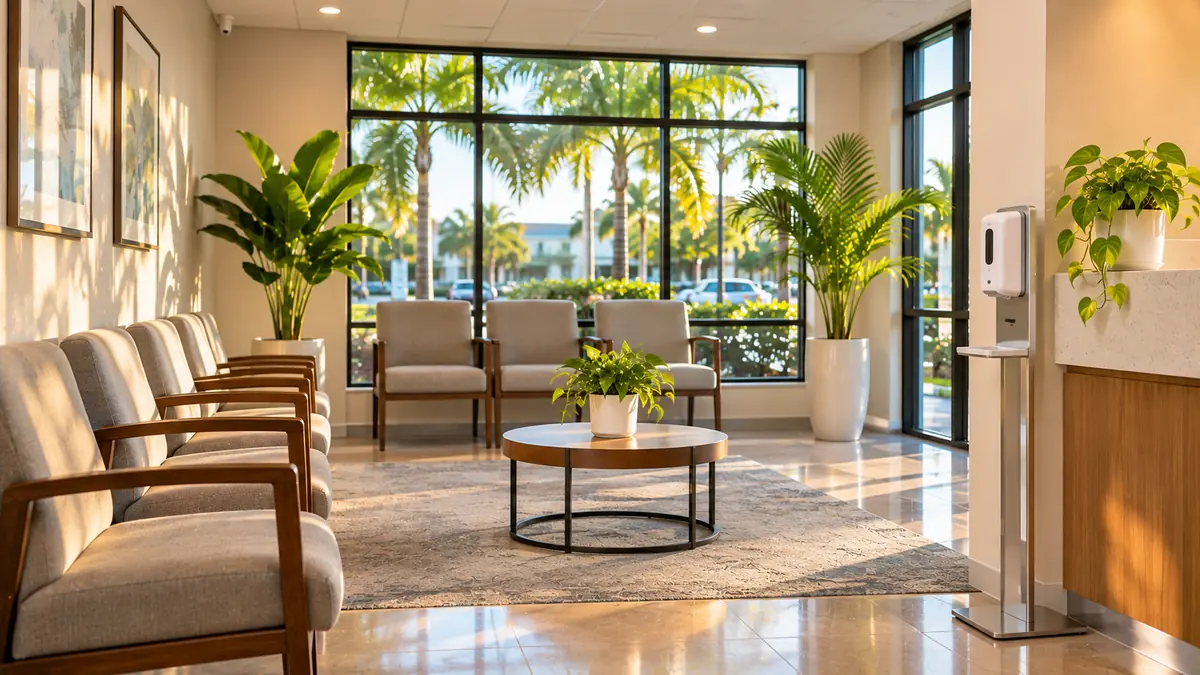
The waiting room is the first thing patients judge, and it is used all day by people who may be sick. Every visit should cover these tasks.
- Chairs and armrests wiped, including the chair fronts patients grip to stand up
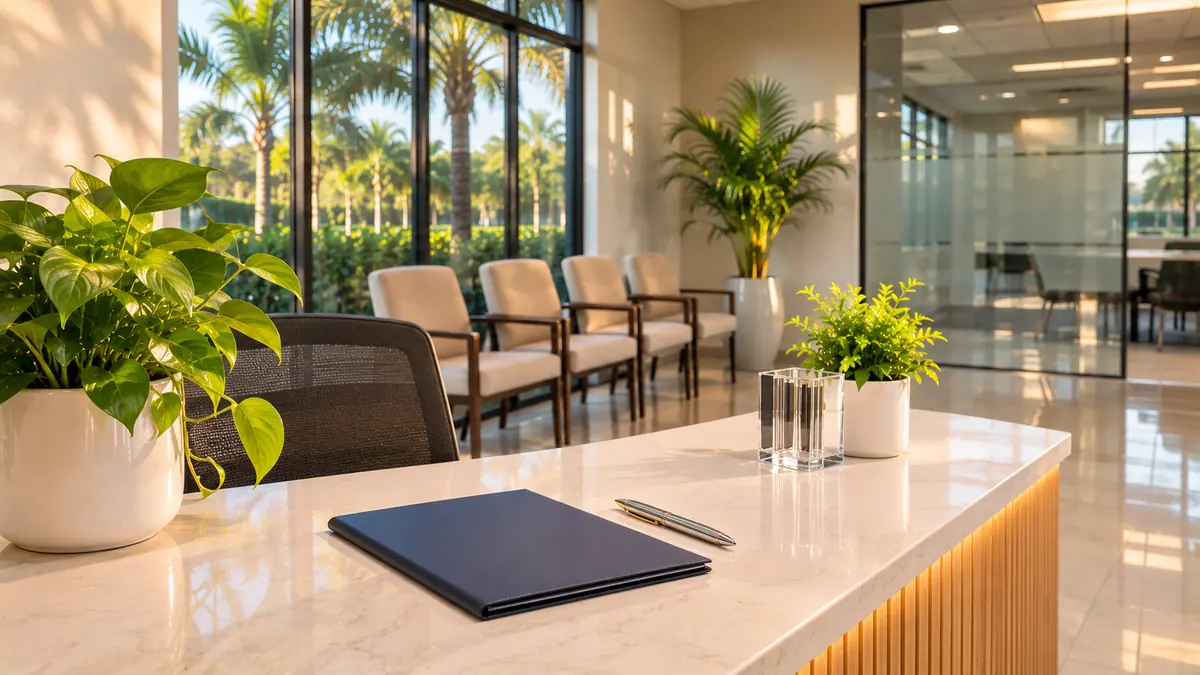
- Check-in counter and the glass or acrylic shield cleaned on both sides
- Check-in pens, clipboards and the card terminal wiped carefully
- Side tables and magazine racks wiped
- Entrance door handles and push plates cleaned, then disinfected
- Trash emptied and liners replaced
- Floors vacuumed and mopped, with extra care near the entrance mat
Behind the front desk, the cleaning team should work around papers, charts and screens. A cleaner should never open drawers or files or move patient paperwork to wipe a surface. [VALIDAR]
Exam and Treatment Room Checklist
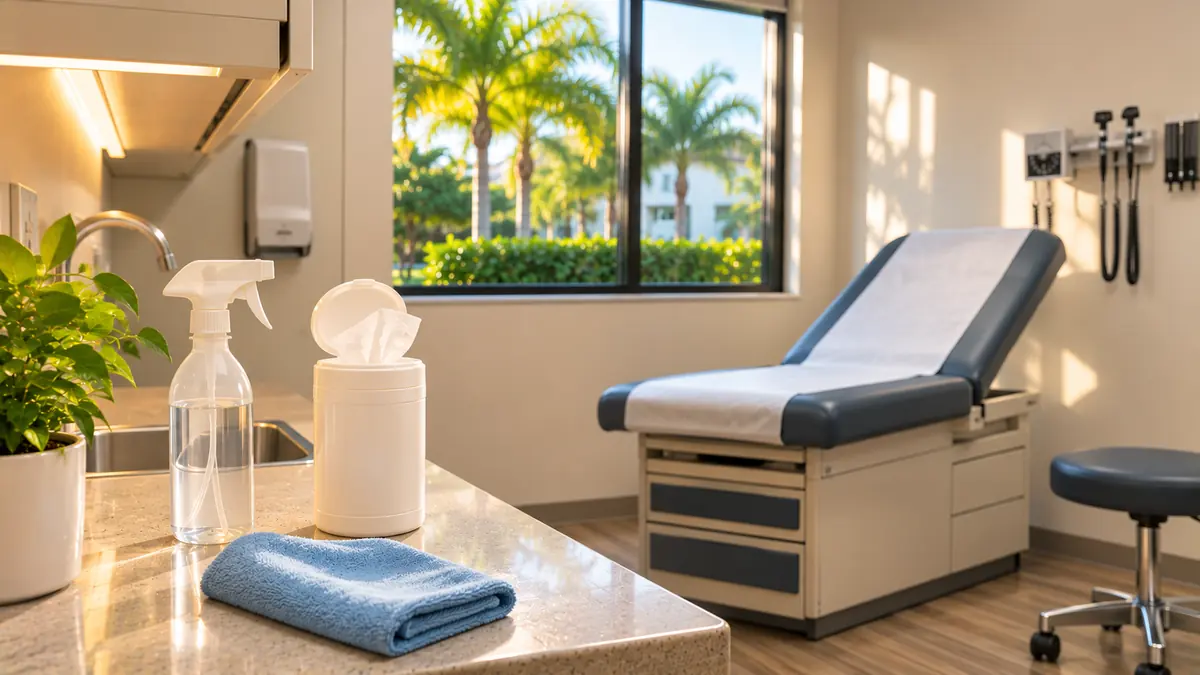
Exam rooms are where the split between clinical staff and cleaning matters most. The cleaning team handles the room; your staff handle patient care surfaces and equipment.
Cleaning Team, After Patient Hours
- Counters cleaned, then disinfected with an EPA-registered product used according to its label [VALIDAR: desinfetante registrado na EPA que a Anne usa]
- Sinks and faucets cleaned
- Chairs and rolling stools wiped
- Outer surfaces agreed with your staff, such as cabinet fronts and door handles
- Regular trash emptied, never red bags or sharps containers
- Floors mopped, including under the exam table where it can be reached
Clinical Staff, Between Patients
Exam table paper, the surfaces patients touch during care, and any medical or dental instruments stay with your team. The CDC's dental guidance calls these clinical contact surfaces and says they should be barrier protected or cleaned and disinfected between patients, in its page on cleaning and disinfecting environmental surfaces.
Floors, walls and sinks are what the same page calls housekeeping surfaces. They carry less risk and can be cleaned with less rigorous methods, which is why they fit an after-hours cleaning visit.
Restroom and Break Room Checklist
Patient restrooms get the most complaints and the most use, so they need full attention on every visit. The staff break room follows right after.
- Toilets, sinks and mirrors cleaned, then high-touch fixtures disinfected
- Grab bars and the baby changing table wiped
- Soap, paper towels and toilet paper refilled from your stock
- Restroom door handles, inside and out, cleaned and disinfected
- Break room counters, sink and table wiped
- Outside of the fridge, microwave and coffee maker cleaned
- Floors mopped in both rooms
Keep restroom cloths and mop heads separate from the ones used in exam rooms and the break room. It is a small habit that keeps one room's germs out of another.
High-Touch Points Across the Practice
Some surfaces are touched by every patient, every staff member and every visitor. They should be cleaned and then disinfected on every visit, whatever else the visit covers.
- Door handles and push plates on every door patients use
- Light switches in exam rooms, restrooms and hallways
- Elevator buttons and stair rails in shared medical buildings
- Shared phones and keyboards at the front desk, wiped carefully if agreed
Disinfection only works if the product stays on the surface long enough. The EPA says the surface should stay visibly wet for the full contact time on the label, as it explains on its page about selected EPA-registered disinfectants. Read more in cleaning vs disinfecting in a medical office.
Want this checklist written for your practice?
We walk through your rooms with your office manager and turn this list into a written scope for after-hours cleaning for medical and dental offices.
Request a Medical Office WalkthroughWho Does What: Clinical Staff, Cleaning Team and Waste Hauler
Writing the split down closes the gaps before the first visit. This table is the version most small practices can start from.
| Task | Clinical staff | Cleaning team | Licensed waste hauler |
|---|---|---|---|
| Between patients | Exam table paper, patient care surfaces, instruments | Not on site during patient hours | Not involved |
| Spills of blood or body fluids | Cleaned up under the practice's own plan | Not handled [VALIDAR] | Collects the waste if regulated |
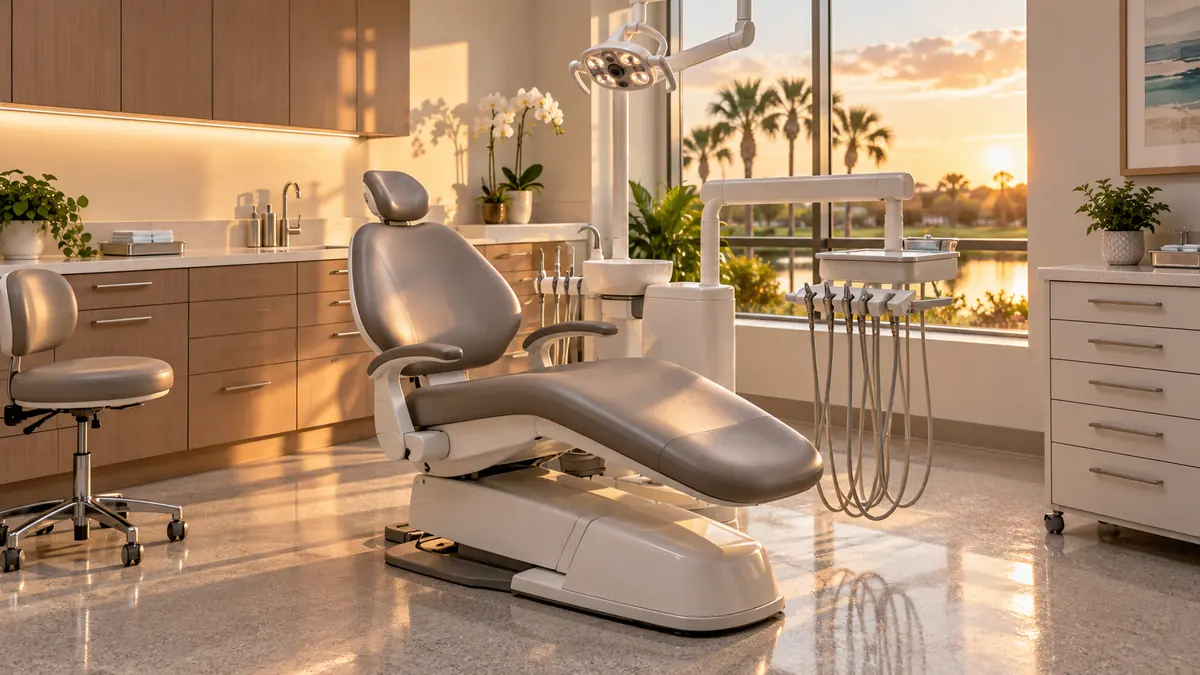
| Dental operatory and sterilization room | Dental chair, delivery unit, instruments and sterilization equipment | Not handled [VALIDAR] | Collects regulated waste, if any |
| After hours | Put away equipment and close charts | Rooms, restrooms, floors and high-touch points | Not involved |
| Waste | Fill sharps and red-bag containers | Regular trash and recycling only | Collects sharps and regulated medical waste |
The practice, as the employer, owns the cleaning plan. The OSHA bloodborne pathogens standard, 29 CFR 1910.1030, requires employers to keep a written schedule for cleaning and decontamination and sets rules for sharps containers and regulated waste. A cleaning company works inside that plan; it does not replace it. When you interview cleaners, our questions to ask a commercial cleaning company help you check that they understand where that line sits.
Gatehouse Clean does not handle regulated medical waste, sharps containers or medical and dental instruments. These stay with your clinical team and your licensed waste hauler. [VALIDAR]
Weekly and Monthly Tasks
Not everything needs to happen every night. Detail tasks can follow a slower rhythm, as long as they are written down with a frequency so they do not quietly disappear.
| Task | Weekly | Monthly |
|---|---|---|
| Baseboards in patient areas | Waiting room and hallways | Exam rooms and offices |
| Vents and ledges in reach | Waiting room | All rooms |
| Chair legs and bases | Waiting room | Exam rooms and break room |
| Restroom grout and corners | Patient restrooms | Staff restrooms |
| Door frames and wall marks | Entrance and reception | Hallways and exam rooms |
Specialized floor care, such as stripping, waxing or carpet shampoo, is a separate service and is not part of this checklist. For how often each area of a practice needs cleaning, see how often to clean a medical or dental office.
After-Hours Cleaning in a Florida Practice
Cleaning once the last patient leaves keeps mop buckets out of the waiting room and lets disinfectants sit for their full contact time in empty rooms. It also means your medical assistants go home on time instead of mopping on paid hours.
Central Florida adds its own work. Summer storms bring wet shoes, umbrellas and wheelchair wheels across the waiting room floor, and restrooms with weak airflow stay damp longer in the humidity. Both are reasons to keep floors and patient restrooms on every visit, all year.
After-hours work also means access: who has the key, who sets the alarm and how the cleaner confirms the visit happened. Settle these during the walkthrough; our guide to how after hours business cleaning works walks through keys, alarms and lockup. To see how rooms and frequency shape the cost, compare our business cleaning prices.
Medical Office Cleaning Checklist FAQ
Short answers to what practice managers ask most about cleaning checklists. Ready to set yours up? Request your cleaning quote.