How often to clean a medical or dental office depends on patient volume and the number of exam or treatment rooms. In most practices, the waiting room, restrooms, trash and high-touch points are cleaned after each day of patients, with detail work weekly or monthly. Small practices with light schedules may start at two or three visits a week.
Key takeaways
- Patient days, not calendar days, set the cleaning rhythm in a practice.
- Busy practices usually need patient areas cleaned after every patient day.
- Dental operatories add between-patient work that stays with dental staff.
- Florida winter volume, flu season and rainy months can call for extra visits.
Jump to the frequency matrix by patient volume and room count, or see what changes between medical and dental offices.
The Short Answer: After Every Day You See Patients
How often to clean a medical or dental office comes down to one rule of thumb: patient areas get cleaned after every day the practice sees patients. A practice open five days a week usually needs five visits; one that sees patients three days a week can often work with three.
Patient volume and the number of exam or treatment rooms then decide how long each visit takes and which rooms need attention every time. A two-room family practice and an eight-operatory dental office can both clean every weekday and still need very different visits.
The CDC's general advice for facilities supports this approach: clean high-touch surfaces regularly, and consider cleaning more often in high-traffic areas, as its guide to cleaning and disinfecting a facility explains. A waiting room full of patients is about as high-traffic as a small building gets.
Cleaning Frequency by Patient Volume and Room Count
The matrix below matches common practice profiles to a cleaning rhythm for each type of area. Use it to start the conversation with your cleaner, then adjust it after a walkthrough.
| Practice profile | Waiting room, restrooms, trash, high-touch | Exam or treatment room floors and counters | Detail work |
|---|---|---|---|
| 1 to 3 rooms, patients 2 to 3 days a week | After each patient day | After each patient day | Once a month |
| 1 to 3 rooms, patients every weekday | Every weekday | 2 to 3 times a week | Once a month |
| 4 to 7 rooms, full weekday schedule | Every weekday | Every weekday | Every two weeks |
| 8 or more rooms, or evening and Saturday hours | Every day the practice is open | Every day the practice is open | Weekly |
This matrix is general guidance for planning, not a schedule Gatehouse Clean promises. Your practice's own infection control plan comes first. [VALIDAR: Anne confirma se a matriz por volume de pacientes e número de salas bate com a prática dela]
Why Room Count Matters as Much as Volume
Every exam room or operatory adds a counter, a sink, chairs and a floor to clean, whether it saw ten patients that day or two. Once a practice passes a handful of rooms, cleaning only some of them each night tends to leave the same rooms behind every week.
Detail Work Can Follow a Slower Rhythm
Baseboards, vents in reach, chair bases and door frames do not change much from one day to the next. A weekly or monthly slot, written into the checklist, keeps them from slipping without adding time to every visit.
Medical vs Dental: What Changes in the Schedule
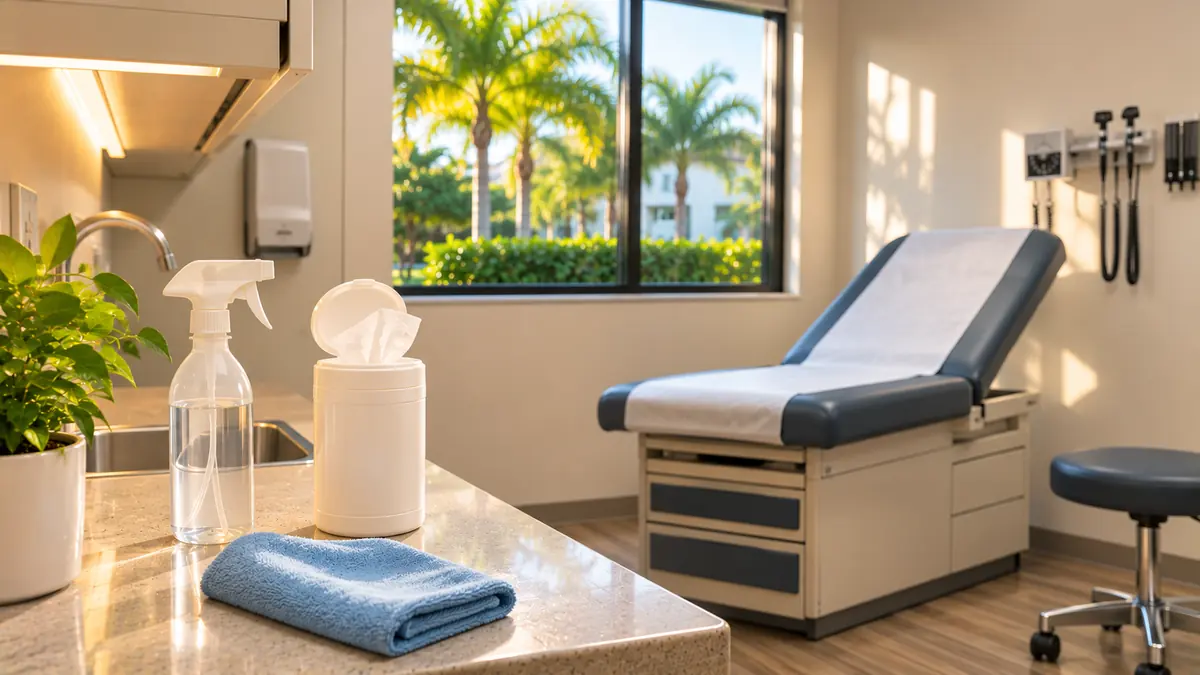
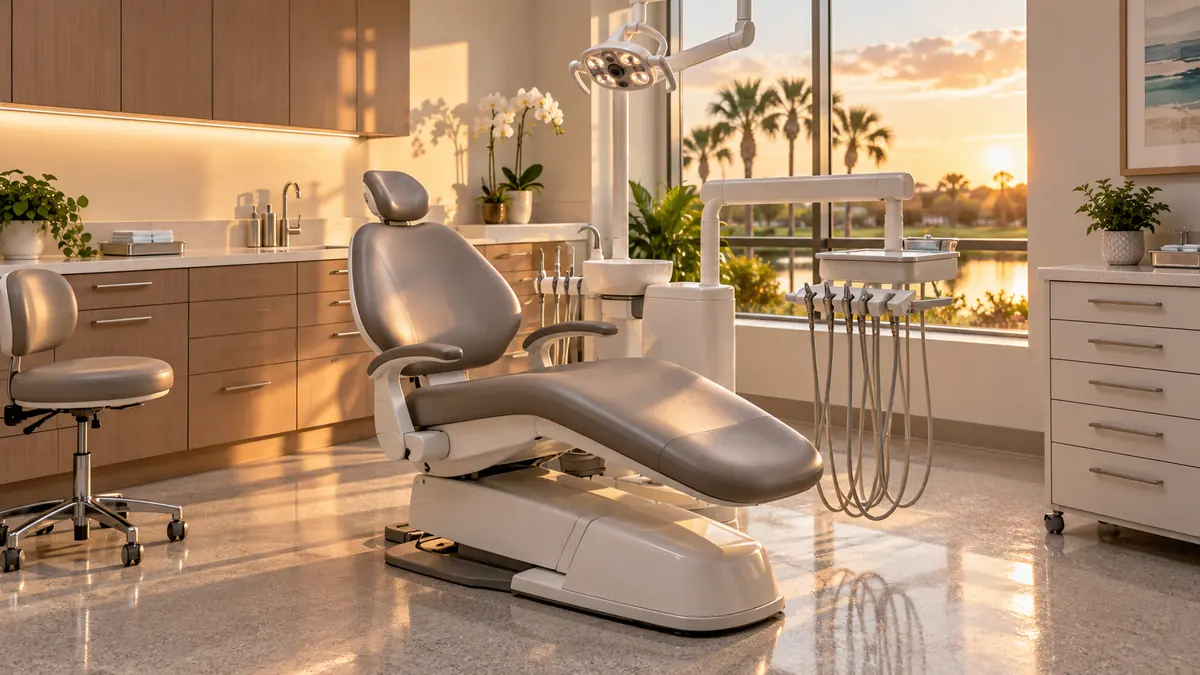
Medical and dental offices share most of the same rooms, but treatment rooms work differently. The table shows where the schedules diverge.
| Area | Medical office | Dental office |
|---|---|---|
| Treatment rooms | Exam rooms with tables, counters and sinks | Operatories with dental chairs, carts and lights |
| Between patients | Table paper and care surfaces, by clinical staff | Barriers changed and clinical contact surfaces handled, by dental staff |
| After hours | Room floors, counters, sinks and trash | Operatory floors and counters as agreed with the team |
| Off-limits for cleaners | Instruments, lab and blood draw supplies | Instruments and the sterilization area |
Dental procedures create spray and spatter, so dental staff have more to do between patients. The CDC's dental guidance on environmental surfaces says surface barriers on clinical contact surfaces should be changed between each patient, and unprotected ones cleaned and disinfected before the next patient.
Floors, walls and sinks fall under what that guidance calls housekeeping surfaces, which can be cleaned with soap and water unless they are visibly contaminated with blood. That is the work an after-hours cleaning visit is built around.
Want the tasks behind each row?
Our medical office cleaning checklist lists them room by room, so you can hand it to your cleaning team.
Get the Medical Office Cleaning ChecklistBetween Patients vs After Hours: Two Different Schedules
A practice really runs two cleaning schedules at once. One happens between patients and belongs to the clinical team; the other happens after the last patient leaves and is usually handed to a commercial cleaning team.
- Between patients: exam table paper, barriers, patient care surfaces and instruments, by clinical staff
- End of the clinical day: equipment put away, charts closed, sharps and red-bag containers managed by staff
- After hours: waiting room, rooms, restrooms, break room, floors and high-touch points, by the cleaning team
- Waste pickup: sharps and regulated medical waste, by a licensed hauler on its own schedule
Both schedules belong in one written plan. Under the OSHA bloodborne pathogens standard, employers keep a written schedule for cleaning and decontamination based on the location, the type of surface, the type of soil and the tasks done there. The after-hours cleaning frequency is one line in that plan, set by the practice.
Gatehouse Clean does not handle regulated medical waste, sharps containers or instruments; those stay with your staff and licensed waste hauler. [VALIDAR]
Florida Seasons and Patient Volume
Patient volume in Central Florida is not flat across the year, and the cleaning schedule can follow it. Three seasonal patterns are worth planning for around Davenport, ChampionsGate and Kissimmee.
Winter Visitors and Fuller Schedules
Many practices in the area see fuller schedules in winter, when seasonal residents are in town. [VALIDAR] A practice that cleans three times a week in summer may need more visits during its busiest months.
Cold and Flu Season
When more sick patients come through the waiting room, the CDC's advice to disinfect where people have been ill applies to chairs, counters and restroom fixtures every night. This is a good time to add high-touch points to every visit if they were not already.
Rainy Season Floors and Damp Restrooms
Summer storms put wet footprints and wheelchair tracks across the waiting room by mid-afternoon, and humid air keeps restroom grout damp. Floors and patient restrooms should stay on every visit through the rainy months.
Signs Your Practice Needs More Frequent Cleaning
The best sign the schedule is too light comes from the people in the building. Watch for these between visits.
- Medical assistants or hygienists mop or take out trash at closing
- Patient restroom soap or paper runs out before the next visit
- The waiting room looks tired by the afternoon of a busy day
- Patients mention the restroom or the floors to the front desk
- The same exam rooms are skipped because the visit ran out of time
If two or more of these show up, add a visit or extend the existing ones before adding new tasks. Every hour clinical staff spend cleaning is an hour taken from patient care or paid as overtime.
How to Set the Cleaning Schedule for Your Practice
These steps work for medical and dental offices alike.
- List your patient days and hours, including any evenings or Saturdays.
- Count exam rooms or operatories, restrooms and staff areas.
- Find your row in the matrix and set a frequency for each area.
- Write down who owns each task: clinical staff, cleaning team or waste hauler.
- Pick an after-hours slot and agree on keys, alarm and visit confirmation.
- Review the plan each season and adjust for patient volume.
If your practice shares a building or suite with a regular office, the office side can follow its own rhythm; see how often an office should be cleaned. For how keys, alarms and lockup work at night, read how after hours business cleaning works.
For the tasks behind each frequency, use our medical office cleaning checklist. For the order of each step on a surface, read cleaning vs disinfecting in a medical office, and for how room count and frequency affect cost, see our cleaning prices for businesses.
Medical and Dental Office Cleaning Frequency FAQ
Short answers to what practice managers ask most about cleaning schedules. Questions about your practice? Talk to us about your cleaning.